Introduction
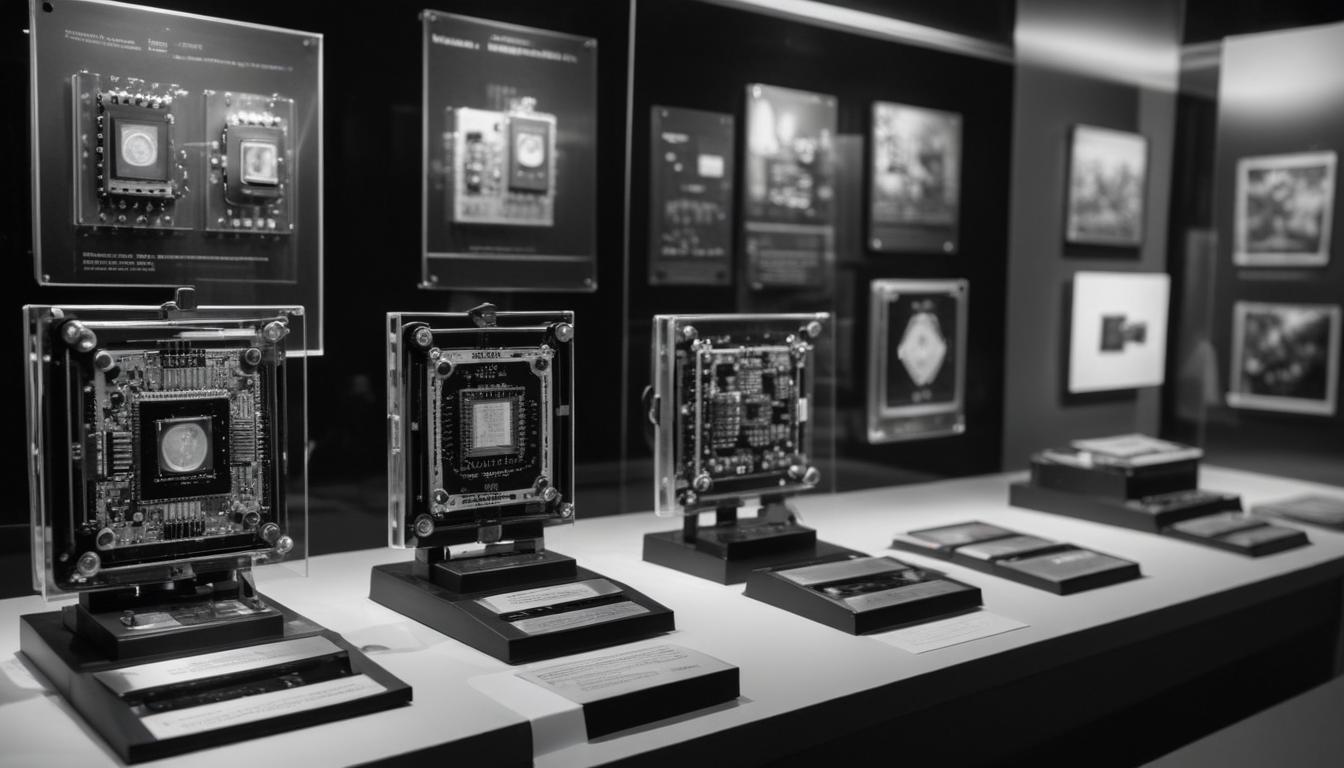
The semiconductor industry has come a long way since the invention of the first integrated circuit. From powering calculators in the 1970s to driving artificial intelligence and 5G networks today, semiconductors form the backbone of modern technology. Understanding this evolution helps us appreciate how far the industry has come and where it’s heading next.
The Early Days of Semiconductors
The journey began with transistors, which replaced bulky vacuum tubes. Their miniaturization led to integrated circuits (ICs), which packed multiple transistors onto a single chip. These ICs paved the way for personal computers, calculators, and other early digital devices.
Rise of Microprocessors
In the 1980s and 1990s, microprocessors emerged, enabling more powerful computing systems. These processors became the heart of desktops, laptops, and gaming devices. Moore’s Law—a prediction that transistor counts on chips double every two years—fueled rapid growth during this era.
The Era of Mobile and Connectivity
The 2000s marked the age of mobile computing. Smartphones, tablets, and portable devices required efficient processors with low power consumption. Semiconductors evolved to deliver faster performance while consuming less energy, enabling mass adoption of mobile technology.
Modern AI and Machine Learning Chips
Today, semiconductors drive breakthroughs in AI, machine learning, and high-performance computing. Specialized chips like GPUs, TPUs, and AI accelerators are optimized for parallel processing, handling massive datasets with incredible efficiency. These chips power everything from autonomous cars to real-time language translation.
The Future of Semiconductors
As we look ahead, semiconductors will become even smaller, faster, and smarter. With the integration of quantum computing concepts, neuromorphic processors, and AI-driven chip design, the next generation of semiconductors will transform industries in ways we are just beginning to imagine.
Conclusion
From humble beginnings to powering the most advanced AI systems, semiconductors have continuously shaped the world around us. At MinanoSpace, we are proud to be part of this journey—building solutions that empower innovation, connectivity, and global progress.